Air conditioning
Air Conditioning Solutions
Residential Air Conditioning
Ensure the ideal temperature in your home with energy-efficient and silent air conditioning units.
Commercial Air Conditioning
Keep your business spaces cool in summer and warm in winter with solutions tailored to your company's needs.
Smart Control
Adjust your air conditioning from anywhere using your smartphone, ensuring maximum comfort and energy savings.
Eco-Friendly
Our products use environmentally friendly refrigerants and are designed to minimize energy consumption and CO2 emissions.
Air Conditioner Maintenance
Ensure that your AC unit is ready to keep you cool during the hot summer days! Our team provides professional air conditioner maintenance with reliability and expertise, ensuring that your system operates flawlessly. Click now to learn more and schedule your appointment!
Excellent Performance and Reliability
Local Systems
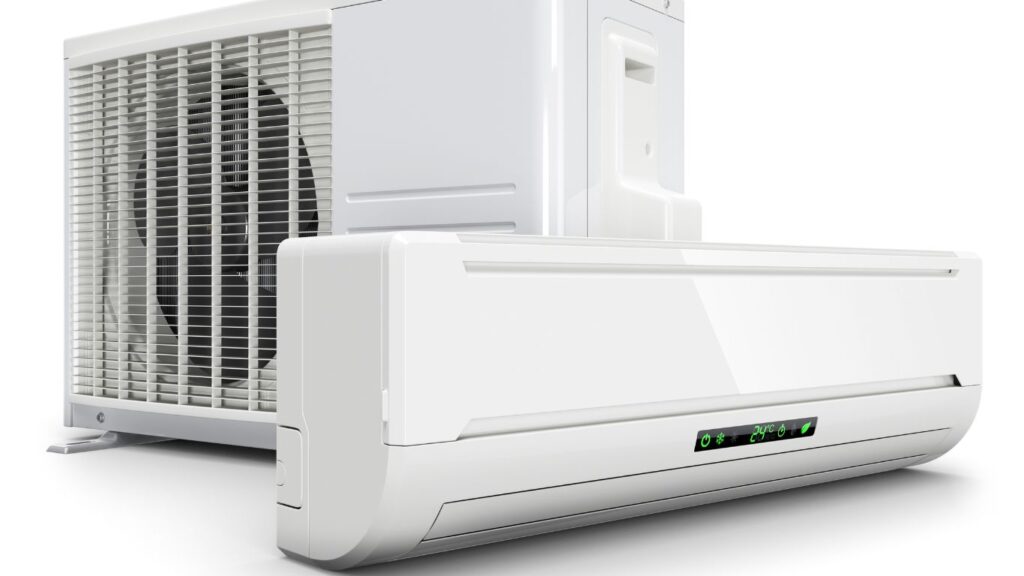
These systems are commonly used in residential and small commercial applications. They are the well-known air conditioners found in most homes.
The indoor and outdoor units are placed in close proximity.
Ideal for cooling a single space.
They do not provide air renewal, so when the air conditioner is off, the space should be adequately ventilated.
Recently, multi-split systems have been gaining popularity. These systems feature one outdoor unit connected to up to three indoor units, effectively replicating a semi-centralized air conditioning system.


Indicative table according to m2 in normal conditions
| Μ2 | RESIDENCES | PROFESSIONAL SPACES |
| 9 | 7000 BTU | 9000BTU |
| 12 | 9000BTU | 12000BTU |
| 15 | 9000BTU | 12000BTU |
| 20 | 12000BTU | 16000BTU |
| 25 | 15000BTU | 20000BTU |
| 30 | 18000BTU | 24000BTU |
| 40 | 24000BTU | 32000BTU |
| 50 | 30000BTU | 40000BTU |
| 60 | 36000BTU | 48000BTU |
Energy class
and coefficients of performance
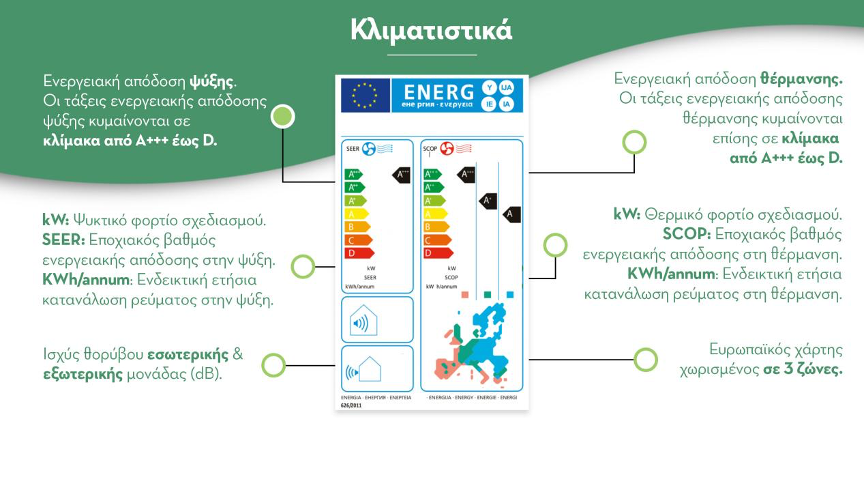
Pay close attention to the energy label of your air conditioning system. All new systems are required to have an energy rating, categorizing them based on their power consumption.
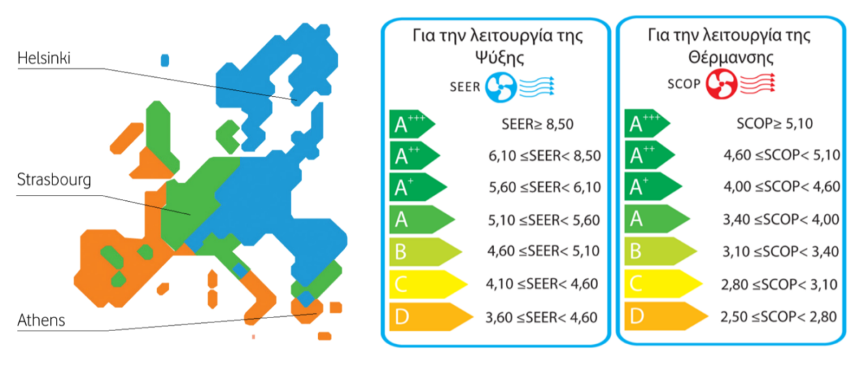
Energy efficiency is rated from A to G (or A+++ to D), where A represents the best performance and G the lowest.
Higher energy efficiency means a higher initial cost, but the long-term savings on electricity bills will be significantly greater.
The most cost-effective systems are those equipped with Inverter technology and belong to at least energy class A.